

Use Custom Fasteners as the parent route when you need to compare a washer with screws, bolts, nuts or other drawing-led fastening parts. It keeps the first sourcing decision focused on the complete fastening requirement.


A custom washer may be a flat load-spreading component, a countersunk seat, a cup-shaped finishing part, a spring element or a magnetic mounting interface. The key purchasing question is not simply OD, ID and thickness. It is whether the part fits the fastener, surface, magnet or mating plate and arrives in the form your team installs. Hardware SP reviews that assembly condition before quotation.
For a drawing-led custom washer manufacturer review, include the washer drawing plus the relevant screw, magnet, strike plate, panel or bracket. This reduces rework caused by a correct washer dimension paired with the wrong countersink, material stack, coating condition or packaging method. A sample is useful when the intended seat or closure is easier to see in the actual assembly.
| RFQ input | What to provide | Decision it supports |
| Washer function | Load-spreading, seating, spring, surface protection, magnetic holding or another assembly role. | Which geometry and acceptance features matter. |
| Key dimensions | OD, ID, thickness, special profile, countersink/cup geometry and critical mating relationships. | Stamped versus turned route and drawing-review priorities. |
| Material and finish | Stainless steel or carbon steel, zinc plating where required, or another specified material and coating. | Corrosion, appearance, magnetic interaction and receiving condition. |
| Set and programme | Magnet, strike plate, screw or other included parts; drawing revision, quantities, repeat demand and packing. | Kit scope, release reference and repeat-supply discussion. |


Flat stainless-steel or carbon-steel washers produced through progressive-die stamping for repeat component programmes and defined OD/ID geometry.
Machined countersunk washers where the seat, cup profile, screw relationship or magnetic mounting interface requires drawing-specific geometry.
Cup washers and magnetic strike plates designed around mounting, closure, surface finish and the mating magnet or fixing method.
Spring Washers
Spring washers for assemblies where the drawing identifies a spring or locking function and the installed condition must be reviewed.
These are drawing-review checkpoints, not general capability promises. The selected route, dimensions, material, finish and acceptance requirement must be confirmed from the actual part and assembly.
| Characteristic | Project reference | Confirmation needed |
| Flat washer geometry | A flat washer may use drawing-specific OD, ID, thickness, hole shape or edge condition. | Bearing surface, mating fastener, material thickness and burr-sensitive features. |
| Countersunk or cup form | A washer may seat a countersunk screw or create a cup-shaped visible or protective interface. | Angle, depth, head relationship, surface and assembled appearance. |
| Magnetic mounting set | A washer or strike plate may work with a magnet, screw and panel as one set. | Magnet size, contact surface, fixing method, closure condition and kit contents. |
| Material and coating | Stainless steel is normally supplied unplated; carbon steel is commonly zinc plated when specified. | Drawing-specified material, coating, environment and protected surfaces. |


For stainless steel custom washers, stainless steel can be supplied without plating where the specified material and surface condition suit the environment. For carbon-steel washers, zinc plating is commonly specified. Other materials and coatings can be reviewed when the drawing defines the required condition. The key is to match the finish to corrosion exposure, appearance, contact surface and magnetic mounting need.
For countersunk washers for magnets, the washer can be supplied with the magnet as a coordinated set. We also produce magnet strike plates and cup washers used around magnetic mounting. Provide the magnet size, plate, screw, panel and intended closure condition so the components are not evaluated as unrelated loose parts.


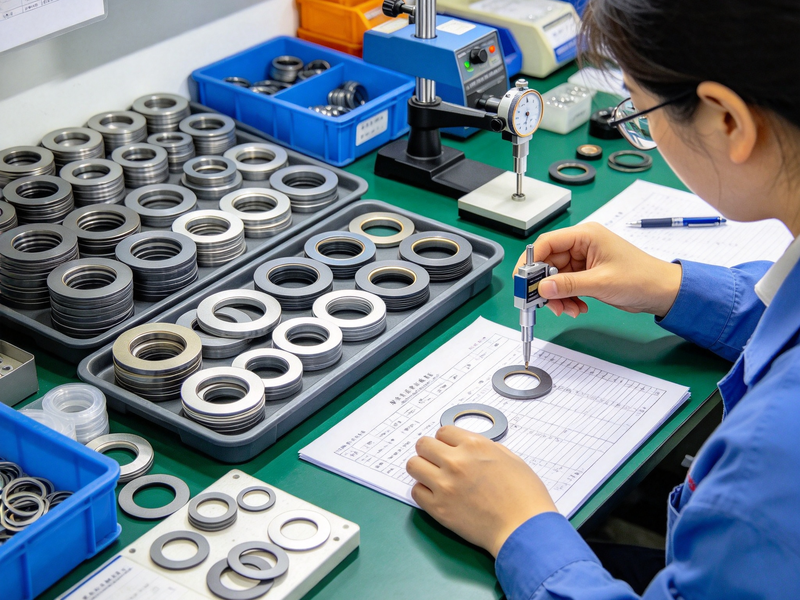
The drawing-led inspection discussion should follow the function: OD and ID, thickness, countersunk or cup geometry, edge condition, spring form, finish, strike-plate contact surface, kit content and packing. Share the approved revision and your receiving requirement.
Use a custom washer when a catalogue item cannot match the required OD, ID, thickness, hole shape, countersunk seat, cup form, spring function, material, coating or magnetic assembly interface. Start with the part’s job in the assembly. Hardware SP can review the drawing and mating components before comparing a route.
Provide the current drawing or sample, key OD/ID/thickness dimensions, material and finish, washer function, mating screw or bolt, and any magnet, strike plate, panel or kit requirement. Include quantity, drawing revision, receiving evidence and packing condition so the quotation covers the supplied assembly state.
A countersunk washer should be reviewed as a machined part when its turned seat, cup profile or mating relationship needs drawing-specific geometry. The decision depends on the actual profile, material, screw or magnet interface and programme. Do not select a route from the word “countersunk” alone.
Yes, Hardware SP can review countersunk washers, cup washers, magnets and strike plates as a supplied set when you define the components and installation condition. Provide the mating surfaces, fixing method, closure requirement, kit contents and packing expectation so the delivered set is clear before quotation.
Stainless steel and carbon steel are common starting points. Stainless steel is normally supplied unplated, while carbon steel is commonly zinc plated when specified. Other materials and coatings can be reviewed against your drawing, environment, contact surface, appearance and assembly requirement; final selection requires project confirmation.