A custom welded assembly is more than several metal parts joined together. It is the defined relationship between components, joints, datums and post-weld features that must work in your next operation. A practical sourcing review separates what is fixed by the drawing from what still needs clarification: material, joint detail, assembly sequence, critical interface, finish, inspection evidence and delivery condition.
A custom brass turned part is usually chosen because the rotating geometry carries a specific job: spacing, locating, threading, connecting, sealing or supporting another component. The purchasing risk is not only the visible profile. It is whether the thread, bore, shoulder, surface and supplied condition are defined around the exact component it must meet.
For a useful quotation, send the current drawing or CAD, material requirement, mating component, critical dimensions, threads, bore details, quantity, revision, inspection evidence and packing requirement. If the component is part of a set, define the set-level need. This lets the review focus on the points that determine assembly fit.
| RFQ input | What to provide | Decision it supports |
| Functional use | Mating part, locating, connecting, spacing or sealing role. | Which dimensions and surfaces govern assembly. |
| Part definition | Current drawing/CAD, OD/ID, thread, bore, shoulder and material. | Turning route and comparable quote. |
| Finished condition | Visible surfaces, deburring, coating if specified and protection needs. | Delivery and receiving requirement. |
| Programme context | Quantity, revision, repeat expectation and packing format. | Release reference and future supply. |


These are drawing-review checkpoints, not generic capability claims. Final material, process, tolerances, inspection and delivery condition require confirmation from the actual project.
| Characteristic | Project reference | Confirmation needed |
| Threaded interface | A brass part may rely on internal or external thread engagement and a bearing surface. | Thread system, mating component and functional seating. |
| OD, ID and shoulder | Rotational dimensions may locate, support or space connected parts. | Critical relationship, datum and assembly function. |
| Material and finish | The material may be selected around corrosion, conductivity, wear or appearance requirements. | Drawing grade, contact condition and finished state. |
| Part set | A brass part may be supplied with a mating screw, washer or another component. | Contents, protection and packing requirement. |
For rotational components with more complex OD/ID, grooves or concentric relationships, see CNC Turning Parts. For a threaded interface retained in a parent material, see Threaded Inserts. Add live links after the destination URLs are verified.
Show what the part touches, locates, seals or threads into. The part name alone rarely explains the functional risk.
State the approved revision, critical dimensions, material/finish and any customer-defined acceptance evidence.
Specify whether parts need protection, counting, labelling or grouping as a matched hardware set.
Brass is often selected for machinability, corrosion behaviour, conductivity or a visible finished appearance. The correct purchasing instruction still needs the drawing-specified grade, the contact material, operating environment and required finished condition. If lead content, water contact, electrical performance or a coating requirement matters, include the applicable project specification rather than assuming it from the word “brass.”
Where the part is supplied with screws, washers or a magnetic counterpart, specify the complete set and the condition in which it is received. Route connecting-hardware requirements to Custom Fasteners and washer-specific requirements to Custom Washers after the live URLs are verified.


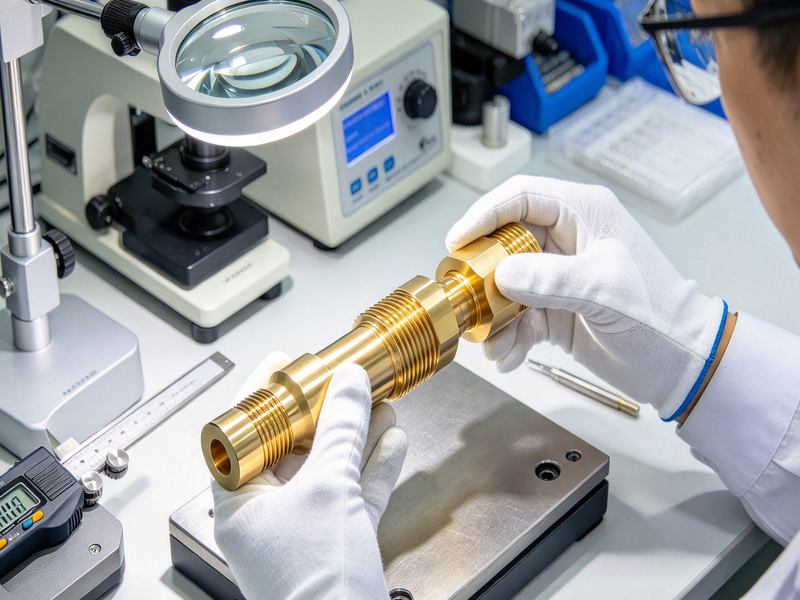
Release should focus on the dimensions and conditions that determine installation: critical OD/ID relationship, bore, thread, shoulder, material/finish, set contents and packed condition. Provide the approved revision and receiving evidence.
Send the current drawing or CAD file, brass material requirement, mating component, relevant thread and bore details, quantity, revision, acceptance evidence and packing requirement. If the part works in a set, include every related component and the required supplied condition.
Use the drawing or project specification to define the brass grade and any requirement related to contact material, corrosion, conductivity, lead content or finish. If the material selection is not final, identify the operating condition and open decision for review before the quotation is released.
Brass turning is a relevant route when the functional geometry is primarily rotational, such as threads, bores, shoulders, grooves, spacers or connector bodies. The final route depends on the drawing, material, part relationship and programme requirement.
Show the thread system, engagement direction, mating component and any seating or sealing face. A thread name without the connected part may not describe the functional requirement. Include a section view, sample or assembly image when it clarifies the interface.
Changes to material, OD/ID, thread, bore, shoulder, mating interface, finish, part-set contents or packing can change the released requirement. Send a clearly identified revision before repeating or changing an order so each party works from the same technical reference.
Hardware-SP can assess B2B drawing-led projects where the drawing, sample or technical requirement defines the brass component and its mating function. We review feasibility, quote, manufacture, control quality and ship against the confirmed requirement. Final route and acceptance details depend on the actual project information.