An accurate custom bolt manufacturer quote starts with the current drawing revision and the joint it serves. Include mating information where it changes the head seat, shoulder fit, engagement length, access or finished condition. Tell us what must be supplied with the bolt, not only what must be machined into it.
| RFQ input | What to provide | Decision it supports |
| Joint function | Installed orientation, mating part, load or locating role, access and protected surfaces. | Head bearing area, shoulder function and acceptance basis. |
| Thread requirement | Metric or inch system, diameter, pitch/TPI, class, threaded length and locking need. | Thread route and inspection points that matter to assembly. |
| Material and condition | Drawing-specified material, finish, corrosion or friction requirement, and packing protection. | Material and final condition needed at receiving. |
| Program information | Current revision, sample stage, expected quantities, repeat demand and documentation needs. | Commercial comparison, review timing and controlled repeat supply. |


These are drawing-review checkpoints, not general capability claims. The selected route and final acceptance requirements must be confirmed from the actual geometry, material and production program.
| Characteristic | Project reference | Confirmation needed |
| Head interface | A bolt may use a hex, flange, socket or drawing-specific head form. | Bearing face, drive access, head height and mating surface. |
| Shank and shoulder | A plain shank or stepped geometry may locate or support another component. | Diameter relationship, effective length and functional datum. |
| Thread condition | The thread may be full or partial length and use metric or inch definition. | System, pitch/TPI, class, engagement and runout requirement. |
| Final handover | The supplied bolt may need finish, locking, assembly or protective packaging. | Required delivered condition and receiving inspection evidence. |
For threaded solid-stock interfaces, CNC Threaded Components can support the related specialist discussion. Where a project includes brackets or formed fastening elements, Metal Stamping may be relevant to that adjoining component. Keep the bolt and its mating part linked in the RFQ so the functional datum is not lost between processes.
For stainless steel custom bolts, steel bolts, brass bolts or another drawing-specified material, the material name alone is not enough. Explain the environment, surface condition, corrosion expectation, contact surfaces, locking need and packaging protection. If a finish affects the threaded connection or head bearing condition, include it in the review rather than adding it after quotation.
Whether your requirement is custom bolts with special heads, custom threaded bolts, custom bolts for industrial equipment or high-volume custom bolts, start with the same evidence: drawing revision, functional joint, material and thread definition, finished condition and repeat-demand context. That information produces a more useful quote than a generic request for a “special bolt.”
For related buyer guidance, connect this page to Custom Bolt Design Guide, Custom Bolts vs Standard Bolts and an approved Custom Bolt Case Study after those supporting pages are published and their URLs are verified.
For equipment, fixtures and automation assemblies, identify locating surfaces, installation access, repeated adjustment, service conditions and the component that the bolt positions or clamps. The drawing review can then focus on the features that protect alignment and assembly time.
For a bolt that passes through a panel, bracket or hinge assembly, state the material stack, clearance, engagement, installation sequence and delivered hardware condition. This prevents the bolt from being quoted as an isolated item when its function depends on an assembled set.
For a repeat program, issue the controlled drawing revision and tell us what receiving must verify. This gives procurement, engineering and quality a shared reference for the bolt, its packing and subsequent repeat orders.
Use a custom bolt when a catalog item cannot satisfy the head seat, drive access, shoulder relationship, thread length, special feature, material, finish or delivered assembly condition. Start with the joint function and current drawing. Hardware SP can review whether the non-standard feature is necessary before a manufacturing route is compared.
Provide the current drawing or CAD file, the mating or installed condition, thread system and size, material and finish requirement, critical head or shoulder features, expected quantities, revision status, inspection needs and packaging requirement. A sample is useful when it explains function or receiving condition more clearly than a drawing.
State whether the thread is metric or inch, plus diameter, pitch or TPI, class, threaded length and any required runout, locking or mating condition. If the bolt engages a customer component, include the mating detail where it controls function. This avoids treating a thread as a generic feature.
They may, when those requirements are defined in the RFQ and confirmed during review. State the finish, protected surfaces, locking feature, associated washers or mating hardware, packing and receiving condition. The goal is to quote the condition your team installs, rather than an unfinished bolt that needs later clarification.
Share the current stage, expected quantities and repeat-supply expectation. A drawing review can separate the initial decision from the longer-term program and clarify what may need confirmation before a route is released. Do not assume that a high-volume route or a low-volume route fits from quantity alone.
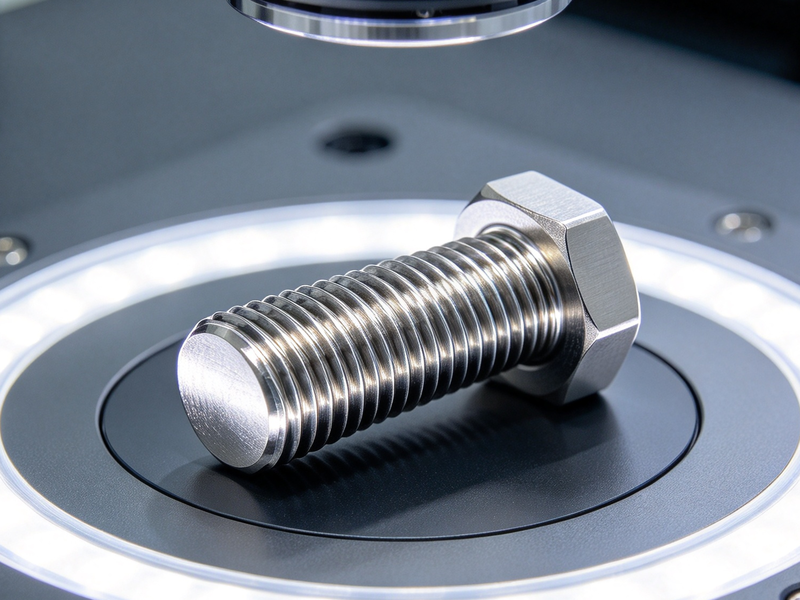
The practical inspection plan should follow the joint: head-bearing face, shank or shoulder, thread condition, special holes, finish, protected surfaces and packing. Provide the approved revision and the evidence your receiving team needs.