A custom brass threaded insert creates a defined metal thread where the parent material alone may not provide the required repeated screw connection. The sourcing risk is not only the internal thread size. It is whether the outside geometry, installation method, host material and final mating screw work as one requirement. The drawing review should make that relationship clear before pricing.
Send the current insert drawing or sample, mating screw/thread detail, parent material, intended installation method, external retention form, finished condition, quantity, revision and packing requirement. If the insert is used in a moulded part, include the relevant boss, hole or cross-section information where available.
| RFQ input | What to provide | Decision it supports |
| Thread and mating screw | Thread system, screw or bolt, engagement need and installed condition. | Internal thread and assembly relationship. |
| Parent material | Plastic, wood, composite or another material with its relevant host feature. | Retention geometry and installation discussion. |
| Insert geometry | OD, length, collar, knurl/slot form, blind or through condition. | Drawing-led manufacturing scope. |
| Programme context | Quantity, revision, inspection evidence and packing format. | Comparable quotation and repeat supply. |


These are drawing-review checkpoints, not generic capability claims. Final insert type, material, installation, acceptance and delivered condition must be confirmed from the actual project.
| Characteristic | Project reference | Confirmation needed |
| Internal thread | An insert may provide a reusable metric, unified or another specified thread. | Mating fastener, thread system and engagement need. |
| External retention | The host material may require a knurl, slot, collar or defined outside form. | Parent material, host feature and installation route. |
| Insert length and seat | Length and collar can affect blind holes, seating depth and adjacent features. | Installed position and available host thickness. |
| Part set | An insert may be supplied with mating hardware or grouped for one assembly. | Set contents, count, protection and packing. |
For the mating connecting hardware, see Custom Fasteners. For the broader family of retained internal-thread components, see Threaded Inserts. For turned brass component requirements, see Brass Turned Parts. Add live links after their URLs are verified.
Show the screw, parent material and installed direction. This makes the thread requirement meaningful before an insert form is chosen.
State the current revision, thread, critical external dimensions, material and any customer-defined acceptance evidence.
Specify whether inserts need counting, protective packing, separate hardware bags or matched kit-level delivery.
The drawing should identify the brass material requirement, any requested coating or surface condition, the parent material and the operating environment. If electrical contact, corrosion concern, lead-content requirement or a plating condition matters, include the governing project specification. The word “brass” alone does not define the correct insert for every host material or application.
The insert, mating screw and surrounding host material are one assembly relationship. Where washers, bolts or screws form part of the supplied set, use Custom Washers and Custom Bolts as selective related routes after their live URLs are verified.


Build this topic cluster with Brass Threaded Insert Installation Guide, Heat-Set vs Press-In Brass Inserts and an approved Brass Threaded Insert Case Study after those pages are published and URLs verified.
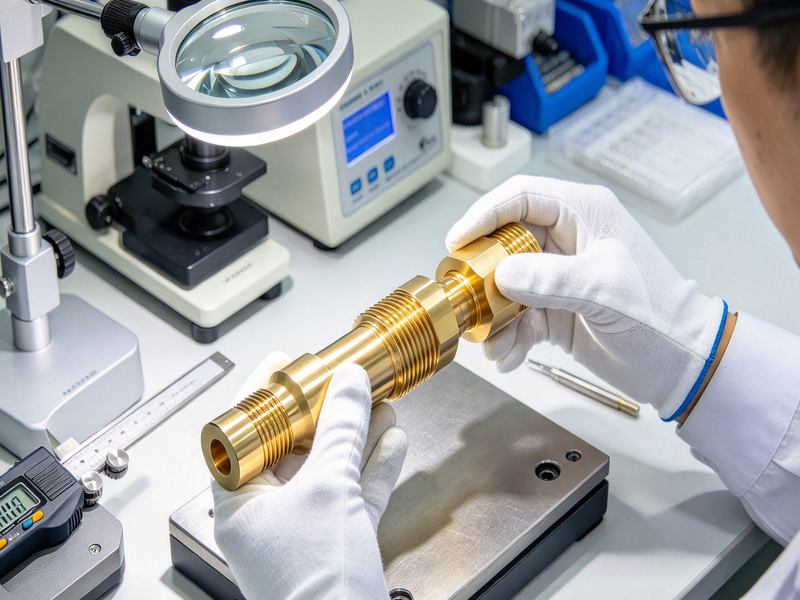
Release should focus on the features that govern installation: internal thread, external retention geometry, OD, length, collar, material/finish, set contents and packed condition. Provide the approved revision and receiving evidence.
Provide the insert drawing or sample, mating thread, host material, installation method, external geometry, material/finish requirement, quantity, revision, inspection evidence and packing. A cross-section or boss/hole detail improves the review when the insert is installed in a moulded or formed component.
Choose from the parent material and your planned installation route. Heat-set and ultrasonic inserts are often considered with thermoplastic applications, while press-in requirements depend on a controlled host feature. The drawing should define the host material, installed position and retention expectation before the insert type is released.
Knurl or external retention geometry affects how the insert interfaces with the host material and installation route. Specify the required external form, OD, length and collar together with the parent material. Do not select a knurl pattern from a picture alone when the part must work in a controlled assembly.
Show the internal thread system, mating screw or bolt, engagement need and installed direction. If the joint has a seating surface, washer or clearance issue, include the related drawing or section. That lets the supplier review the insert as part of the functional connection rather than an isolated part number.
Yes. A sample can start the discussion, especially with a mating screw, host-material detail and expected application. Add dimensions, material/finish information, quantity and acceptance requirement where available. The final supply scope should still be confirmed against the controlled drawing or documented technical requirement.
Hardware-SP can assess B2B drawing-led projects where the insert, parent material and mating thread are defined by drawings, samples or technical requirements. We review feasibility, quote, manufacture, control quality and ship against the confirmed requirement. Final route and acceptance details depend on the actual project information.