A custom stainless steel fastener is not simply a carbon-steel shape made from a different metal. Its grade, thread pair, bearing surface, mating material, installation route and environment can all change how the joint performs. This page helps OEM buyers turn those decisions into a drawing-led sourcing scope instead of relying on a generic “stainless” description.
Send the current drawing or sample, stainless material requirement, mating components, thread details, expected environment, head/drive, quantity, revision, acceptance evidence and packing requirement. Identify whether corrosion exposure, cosmetic finish, dissimilar-metal contact, torque procedure or anti-seize requirement is governed by your design or specification.
| RFQ input | What to provide | Decision it supports |
| Service environment | Moisture, chemical, outdoor, washdown or other relevant exposure. | Material and finished-condition review. |
| Threaded joint | Mating bolt/nut/screw, thread system, seating surface and installation condition. | Galling-risk and joint compatibility discussion. |
| Part definition | Drawing/CAD, head, shank, thread, washer/insert relationship and grade callout. | Comparable custom-fastener quote. |
| Delivery condition | Quantity, revision, inspection evidence, protection and set-level packing. | Receiving and repeat-supply clarity. |


These are drawing-review checkpoints, not generic capability claims. Final stainless grade, process, corrosion suitability, inspection and delivery condition require confirmation from the actual project.
| Characteristic | Project reference | Confirmation needed |
| Material and exposure | A stainless grade is selected against the intended environment and connected materials. | Drawing grade, exposure condition and any project standard. |
| Thread pair | Stainless threaded parts can require attention to engagement, speed and surface condition. | Mating component, installation instruction and acceptance concern. |
| Contact surfaces | Washers, seating faces or other metals can influence the full joint behaviour. | Mating materials, isolation and specified surface state. |
| Set condition | The delivered fastener may include bolts, nuts, washers or inserts. | Contents, count, protection and packing requirement. |
For the parent custom-hardware route, see Custom Fasteners. For specialized bolts, screws, washers and inserts, use Custom Bolts, Custom Screws, Custom Washers and Threaded Inserts after their live URLs are verified.
Start with where the joint works: its environment, maintenance access and contact materials. This tells purchasing what “stainless” must mean for the project.
Use the controlled grade and any required surface state. Do not substitute a broad alloy family for a project specification.
State whether items are loose, matched, protected or supplied as a kit, with the current revision and acceptance evidence.
A grade designation is only one part of the sourcing instruction. State the environment, contact materials, fastening function, visible requirement and any required post-fabrication condition. If the design needs resistance to a particular chemical, temperature or corrosion mechanism, send the governing specification. Hardware-SP will review the documented requirement; it will not assume suitability from an alloy label alone.
Galling or seizure is a buyer-relevant question when stainless threads are tightened under certain conditions. Define the mating combination, thread condition, installation method and any approved lubrication or surface requirement in the RFQ. The correct response belongs in your joint specification, not in a generic promise about all stainless fasteners.


Build this cluster with Stainless Steel Fastener Material Guide, Stainless Steel Fasteners and Galling Guide and an approved Stainless Steel Fastener Case Study after those pages are published and URLs verified.
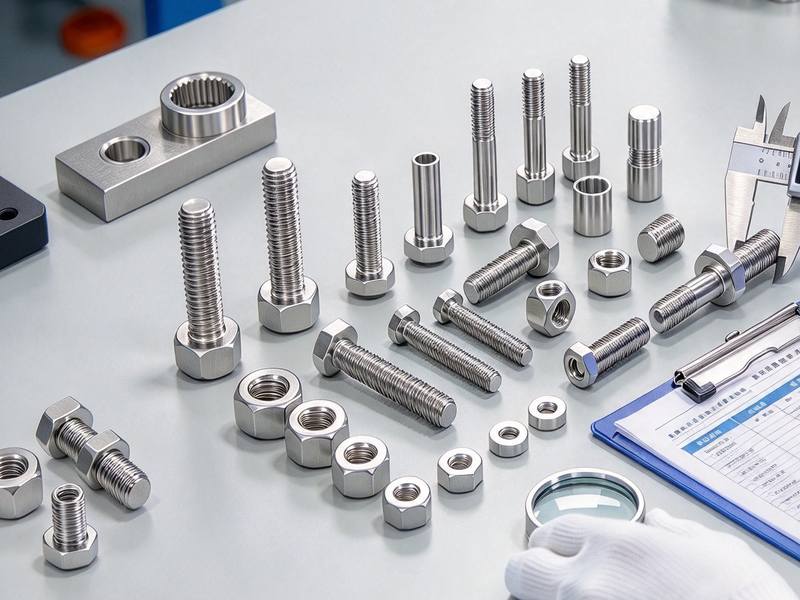
Release should focus on the selected grade, thread and mating condition, head/drive, shank or seating surface, specified finish, included components and protected packing. Provide the approved revision and customer-defined receiving evidence.
Provide the controlled drawing or sample, grade requirement, mating component, thread details, intended environment, head/drive, quantity, revision, acceptance evidence and packing. If corrosion, galling or dissimilar-metal contact is important, identify the governing specification or actual assembly condition.
Choose from the project environment, contact materials and applicable specification rather than a general corrosion-resistance label. Include washdown, outdoor, chemical, temperature and visible-finish conditions where relevant. The grade must be reviewed as part of the complete joint.
Stainless threaded joints can gall under certain material, surface, load and installation conditions. Show the mating pair, thread condition, installation procedure and any approved lubrication or surface requirement. This lets the sourcing review address the risk from the actual joint instead of guessing from the fastener name.
When stainless contacts another metal, moisture and the service environment can affect the full joint. Identify the mating material, contact surfaces and any specified isolation or finish requirement. Treat it as an assembly-level design question, not merely a purchase-line description.
Yes, when the BOM, component quantities, material callouts and receiving condition are defined. State whether items must be installed, counted, bagged, protected or supplied as a kit. The quote should name the delivered set rather than assume it from several separate drawings.
Hardware-SP can assess B2B custom fastener projects where the drawing, sample or technical requirement defines the part and its assembly environment. We review feasibility, quote, manufacture, control quality and ship against the confirmed requirement. Final material and acceptance details depend on the actual project information.