A custom fastener is needed when a standard item cannot meet the assembly’s geometry, thread, head or drive, material, finish, retention, mounting or supplied-set requirement. The purchasing risk is rarely one dimension alone. It is whether every connected part works together and remains defined when the order repeats. Hardware SP uses the drawing and assembly context to clarify that requirement before the manufacturing discussion begins.
A reliable custom fastener manufacturer quotation starts with the current controlled drawing and the parts it contacts. Include the mating component, critical functional dimensions, thread system, material and finish, installation condition, required documentation, quantity, revision and packing. If several parts arrive as one assembly set, define the set-level requirement instead of sending separate unnamed components.
| RFQ input | What to provide | Decision it supports |
| Assembly function | Mating parts, load/locating/retention role, installation access, visible surfaces and service condition. | Which component features are functional in the completed joint. |
| Part definition | Current drawing/CAD, thread, head/drive/shank/washer/insert details, material and finish. | Process review and a comparable quote. |
| Set-level requirement | Related screws, bolts, washers, inserts, magnets or other parts supplied together. | Kit contents, component relationship and packing condition. |
| Programme context | Quantity, repeat expectation, revision status, inspection evidence and receiving requirement. | Release logic and repeat-supply reference. |


These are drawing-review checkpoints, not generic capability claims. The selected route, material, finish, inspection and final delivered condition must be confirmed from the actual requirement.
| Characteristic | Project reference | Confirmation needed |
| Threaded interface | A custom programme may include an internal or external thread, distinct pitch, length, engagement or mating condition. | Thread system, mating component and functional engagement. |
| Head, drive and bearing | A fastener may need a specific head, drive, shoulder, washer seat or surface-contact relationship. | Installation access, bearing surface and assembly sequence. |
| Material and finish | Material or coating may protect against corrosion, wear, visible-surface damage or a specific environment. | Drawing specification, contact surfaces and required supplied condition. |
| Component set | More than one fastening part may be packed, labelled and received as one controlled hardware set. | Contents, order, protection, identification and packing requirement. |
Start with the parts that touch each other: the fastener, mating component, installation side, access, seating surface and service condition. This confirms the functional requirement before a price is compared against a generic part name.
Identify the dimensions, thread, head or drive, retention feature, material/finish and set contents that receiving needs to verify. A clear acceptance basis prevents a technical change from being hidden inside a repeat purchase.
State whether components are loose, counted, protected, labelled or supplied as a kit. Define packing around the way your team stores and installs the hardware, especially when several parts must arrive together.
For stainless steel custom fasteners, carbon steel, brass or another drawing-specified material, define the environment, contact surface, wear or corrosion concern and required finished condition. A zinc-plated, passivated, uncoated or other specified part must still be reviewed with its mating components and packing protection. The material name alone is not a release requirement.
A custom fastener assembly may include multiple parts that only work when their order and contact surfaces are controlled. State whether the product must be supplied as loose pieces, a counted set, a pre-assembled set or a protected kit. That distinction changes packing, receiving and the RFQ discussion.


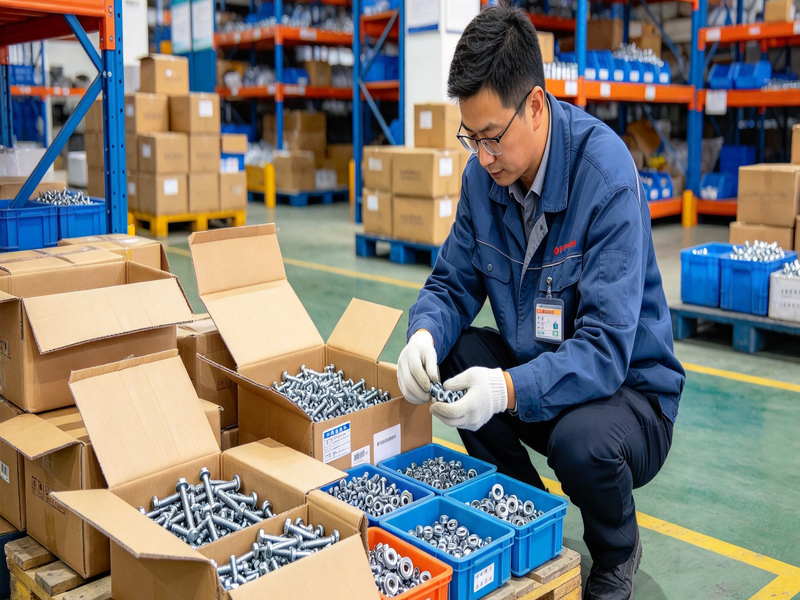
An effective release plan checks the characteristics that govern installation: thread, head or drive, shank/shoulder, washer seat, retention feature, material/finish, set contents and packed condition. Provide the current approved revision and receiving evidence.
Choose a custom fastener when the catalogue item cannot meet the joint’s geometry, material, thread, head or drive, installation, finish, assembly-set or repeat-supply requirement. Start with the actual mating parts and controlled drawing. The correct specialist route then follows from the technical risk in the joint.
Provide the current drawing or CAD file, mating components, thread and critical dimensions, material/finish, installation condition, required supplied state, quantity, revision, inspection needs and packing. If the requirement is a set, show every included component and the intended assembly order.
Decide from the main assembly function. Bolts are generally reviewed around clamping and shank relationships; screws around drive and installation; washers around seating or protection; inserts around retention in a parent material. Each specialist page explains the inputs that make that route appropriate.
They can be reviewed as one set when the part list, component order, mating relationships, protection, counting and packing are defined. This is useful where loose components would create receiving or assembly mistakes. The quotation should state the delivered set rather than assume it from individual drawings.
Changes to thread, head, drive, shank, washer form, insert retention, material, finish, mating interface, set content or packing may change the released requirement. Send a clearly identified revision before repeating or changing the order so all parties work from the same technical reference.
Hardware SP can assess B2B custom fastener projects where the drawing, sample or technical requirement defines the part and its assembly context. We review feasibility, quote, manufacture, control quality and ship against the confirmed requirement. Final route and acceptance details depend on the actual project information.