A custom stainless steel machined part earns its place in a design through the geometry that remains stable in service: a bore that guides, a face that seals, a thread that connects or a shoulder that positions. This page targets those drawing-led components, not standard fasteners. The RFQ should make the material, interface and finished condition visible together.
Provide the controlled drawing or CAD, specified grade, mating component, critical bore/thread/face details, quantity, finish, inspection evidence and packing. If the component works after welding, assembly or exposure to a particular medium, describe that condition so the quote is based on the real functional requirement.
| RFQ input | What to provide | Decision it supports |
| Working interface | Mating component, bore, seat, thread, locating face or sealing relationship. | Feature priority and acceptance focus. |
| Material condition | Drawing-specified grade, service environment and any governed surface requirement. | Machining and finished-part discussion. |
| Part geometry | Current drawing/CAD with critical dimensions, section views and revision. | Route and comparable quotation. |
| Receiving condition | Quantity, inspection evidence, protective packing and delivery destination. | Release and repeat-supply clarity. |


These are drawing-review checkpoints, not capability guarantees. Final grade, machining method, tolerance, finish, inspection and delivery condition require confirmation from the actual drawing and project requirement.
| Characteristic | Project reference | Confirmation needed |
| Bore and seat | A machined bore or face may guide, seal or locate a mating component. | Mating part, critical relation and acceptance method. |
| Thread and mounting | A thread or hole pattern may connect the component without making it a fastener product. | Mating hardware, position and installed condition. |
| Surface state | Finish may be governed by corrosion, cleanability, visible appearance or contact function. | Drawing requirement, affected surfaces and final use. |
| Post-assembly feature | Machining may occur before or after another manufacturing stage. | Sequence, datums and required final interface. |
For rotational sleeves, shafts and bore-driven parts, see CNC Turning Parts. Add the live link after its URL is verified.
Use the drawing to name the role of each critical feature: guide, seal, position, connect, mount or protect.
If the component connects to a welded assembly, seal, shaft, cover or bracket, show the mating geometry and inspection focus.
State the finish, protection, packaging and revision that purchasing and receiving will use to accept the component.
Use the drawing-specified grade and surface requirement. State the environment, contact medium, connected metals, visible surfaces and any cleaning or corrosion concern. If passivation, polishing or another treatment is required, identify the governing requirement and affected faces. Do not assume a finish or corrosion performance from the word “stainless.”
When your component needs a locally machined interface after another metal process, use Welded Assemblies as the related route. Add the live link after the destination URL is verified.


Build this cluster with Stainless Steel Machining Material Guide, Stainless Steel Machined Parts vs Fasteners and an approved Stainless Steel Machined Part Case Study after those pages are published and URLs verified.
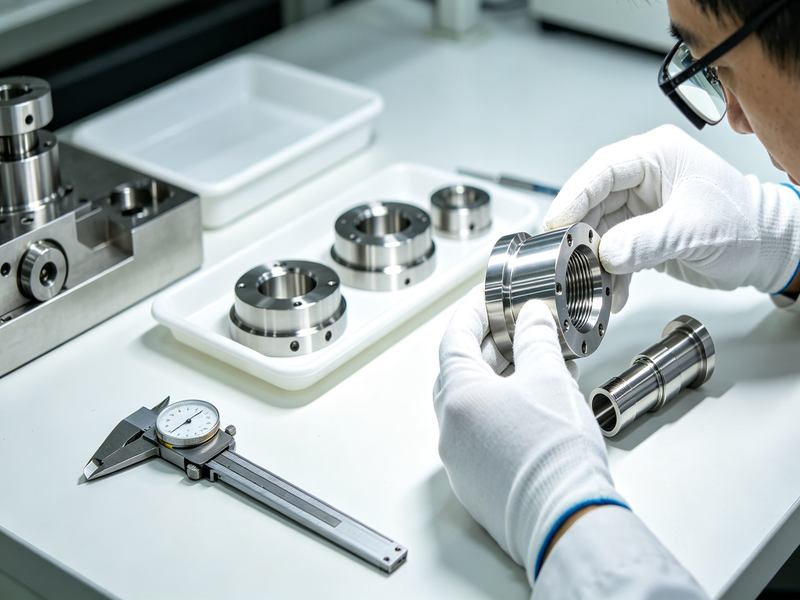
Release should focus on the drawing-defined interfaces: critical bore, thread, seat, face, material/finish, mating relationship and protected packing. Provide the approved revision and customer-defined receiving evidence.
Send the controlled drawing or CAD, stainless grade requirement, mating component, critical features, quantity, finish, inspection evidence and delivery destination. Include a section view or assembly image if the part seals, guides, mounts or locates another component.
This page is for non-fastener components whose machined geometry performs a functional role, such as a housing, fitting, sleeve, valve component or interface block. Use the fastener page when the main product is a bolt, screw, nut, washer or threaded connecting item.
State the required surface condition, affected faces, environment and governing specification. If a treatment is required for cleanability, corrosion, appearance or contact function, identify that purpose in the RFQ. The supplier should review the documented requirement rather than assume it from a generic finish name.
Show the mating component, relevant section view, contact face, bore/OD relationship and any critical dimensions or inspection method. The part cannot be quoted reliably as an isolated profile when its function depends on how it locates, seals or supports another component.
It can be reviewed when the drawing identifies the final datum, sequence and machined interface. Show the pre-machined and finished condition where relevant. The quotation should separate the welded/assembled condition from the feature that must be machined afterward.
Hardware-SP can assess B2B drawing-led projects where the material, geometry and functional interface are defined by drawings, samples or technical requirements. We review feasibility, quote, manufacture, control quality and ship against the confirmed requirement. Final process and acceptance details depend on the actual project information.