

Views: 222 Author: ZHE Publish Time: 2026-03-17 Origin: Site


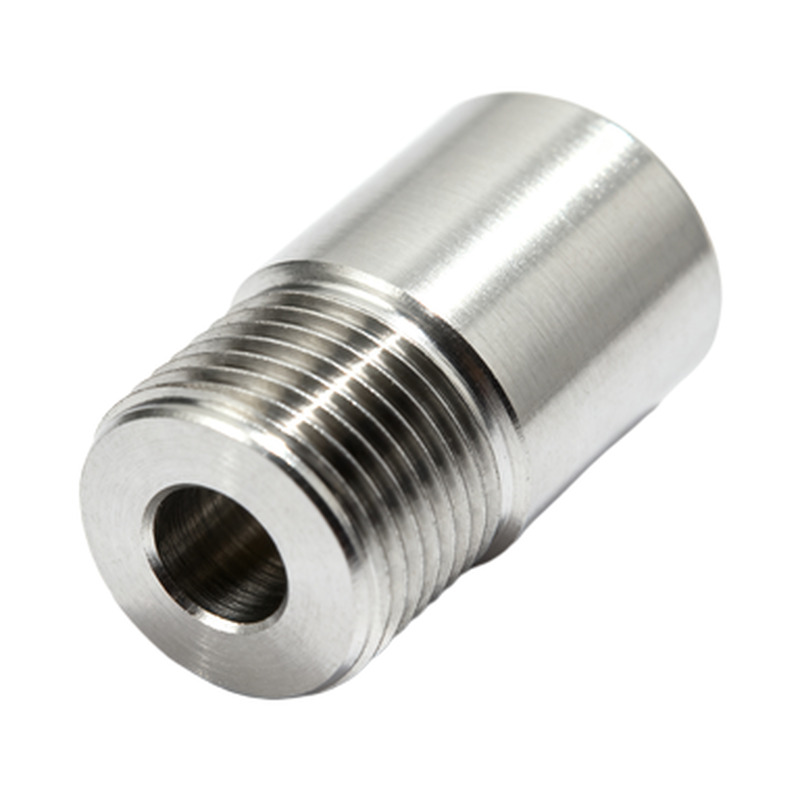
CNC precision-turned parts are cylindrical components manufactured by computer numerical control (CNC) lathes, with an accuracy of ±0.01 millimeters or less. These parts are crucial in assembly as the dimensional accuracy, repeatability, and surface finish directly affect assembly and performance.
Unlike standard machining parts, precision turning parts require clear quality assurance, traceability and inspection procedures - which are crucial for industries such as aerospace, medical equipment and automobiles.
During the CNC turning process, the workpiece rotates while the fixed tool continuously cuts to remove the material, thereby forming a cylindrical structure. This process is particularly suitable for manufacturing shafts, bushings, accessories, and other axisymmetric components with high uniformity.

Stage | Process Step | Description |
1 | CAD + Drawing | Design with GD&T per ISO or ASME standards. |
2 | Programming | CAM software generates G code toolpaths. |
3 | Setup | Machine setup with tooling, offsets, and inspection plan. |
4 | Machining | Turning, grooving, threading, drilling, and boring. |
5 | Deburring + Finishing | Edge removal and surface treatments (anodizing, plating). |
6 | Inspection | CMM, optical comparators, surface roughness testers. |
7 | Documentation | Quality reports, material certs, traceability logs. |
The workpiece is held in a chuck or collet, ensuring concentricity. The CNC controls movement along the Z axis (along the part) and X axis (toward/away from center) to generate precise diameters and features. Modern lathes often include live tooling for milling, drilling, and tapping, enabling complete machining in one setup.
Operation | Description | Typical Applications |
Facing | Creates flat reference surface | Length control, datum faces |
Straight Turning | Produces consistent diameters | Shafts, spacers, bushings |
Taper Turning | Conical transitions | Alignment interfaces |
Grooving Threading | Cuts O ring or snap ring seats | Sealing, retention |
Internal/external threads | Fasteners, fittings | |
Drilling | Axial holes | Flow passages |
Boring/Reaming | Refines hole accuracy | Bearing seats |
Parting | Separates finished part | Final cutoff |
Aluminum Alloys (6061, 7075): Excellent machinability, good corrosion resistance, low cost. Ideal for spacers, housings, and general components.
Stainless Steel (303, 304, 316): High strength and corrosion resistance. 303 for easier machining; 316 for medical/marine applications.
Brass & Copper: Superior machinability, electrical/thermal conductivity. Used for fittings, valves, connectors.
Medical: Bone screws, implants, surgical tools from stainless steel/titanium, demanding biocompatibility and flawless surfaces.
Automotive & EV: Transmission shafts, valve bodies, sensor housings, fuel system components. EV applications include thermal management parts.
Electronics: Connector pins, terminals, housings in brass/copper, often micro precision with excellent conductivity.
Hydraulics & Fluid Control: Pistons, cylinders, spools, couplings where sealing and roundness are critical.
Supplier Evaluation Framework
Quality Certifications: ISO 9001 is baseline. Aerospace requires AS9100D, medical ISO 13485, automotive IATF 16949. Verify active certifications and request FAIR, CMM reports, material certs.
Technical Capabilities: Look for multi axis lathes, Swiss type machines, in house metrology (CMM, optical comparators, surface testers) capable of ±0.005 mm tolerances. Live tooling and mill turn centers reduce setups.
Production Capacity: Factory size >2,000 m² often indicates automation and stability. On time delivery >98% is a strong indicator.
Risk Mitigation: Use detailed RFQs with CAD, GD&T, material specs. Establish clear communication and milestone based payments.
Typical precision turning achieves ±0.01 mm; advanced shops can reach ±0.005 mm or even ±0.0025 mm on critical features.
Bar stock from 0.5 mm to 65 mm; billet work up to 300 mm. Swiss type machines specialize in small diameters (down to 0.3 mm).
Aluminum, stainless steel, brass, carbon/alloy steels, titanium, and engineering plastics like PEEK, PTFE, Delrin.
Check certifications, request references, perform video walkthroughs, and audit FAI reports and non conformance logs.
Standard 10-20 days after drawing approval; expedited prototypes in 5 to 7 days. Additional time for secondary processes.
Yes, many accept orders starting at one piece for prototyping, reducing design risk.
Turning rotates the workpiece against a stationary tool for cylindrical parts; milling rotates the tool against a stationary workpiece for prismatic shapes. Turn mill centers combine both.

Yes, with rigid plastics like PEEK, PTFE, Delrin, Nylon. Proper thermal control is required to avoid deformation.
Yes, material certs are standard with every delivery from certified suppliers.
Xiaoshan, Hangzhou, Zhejiang, China
carlxu@hardware-sp.com
Mon - Sat: 8AM - 6 PM