


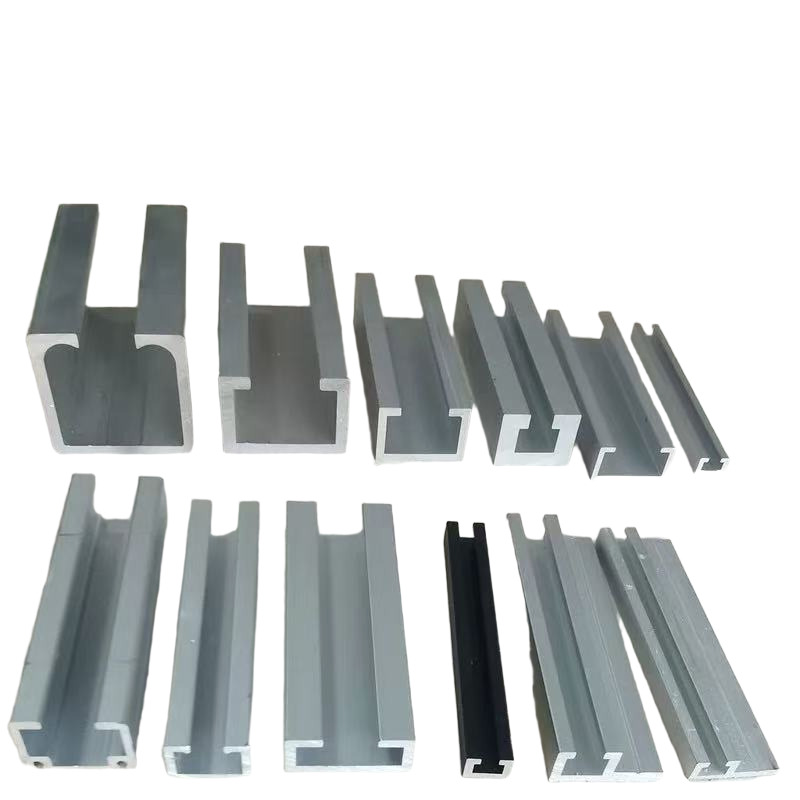
Aluminum Profile are long, strip-shaped metal products. They are made by pressing the heated aluminum ingots through molds - this process is called extrusion.
Hangzhou Shengpeng can create complex cross-sectional shapes and directly incorporate practical functions such as grooves, cavities and installation channels within the profiles.
This component integrates structural support, connection points and an attractive surface all in one, making aluminium profiles an indispensable component in countless modern products and structures.
The 6xxx series alloys dominate the market, with 6063 and 6061 being the most common. The tensile strength of 6063-T5 is 160 to 200 megapascals, suitable for lightweight applications; while 6061-T6 has a tensile strength of 290 - 310 megapascals - approximately 50% stronger than the former, suitable for structures with higher strength requirements
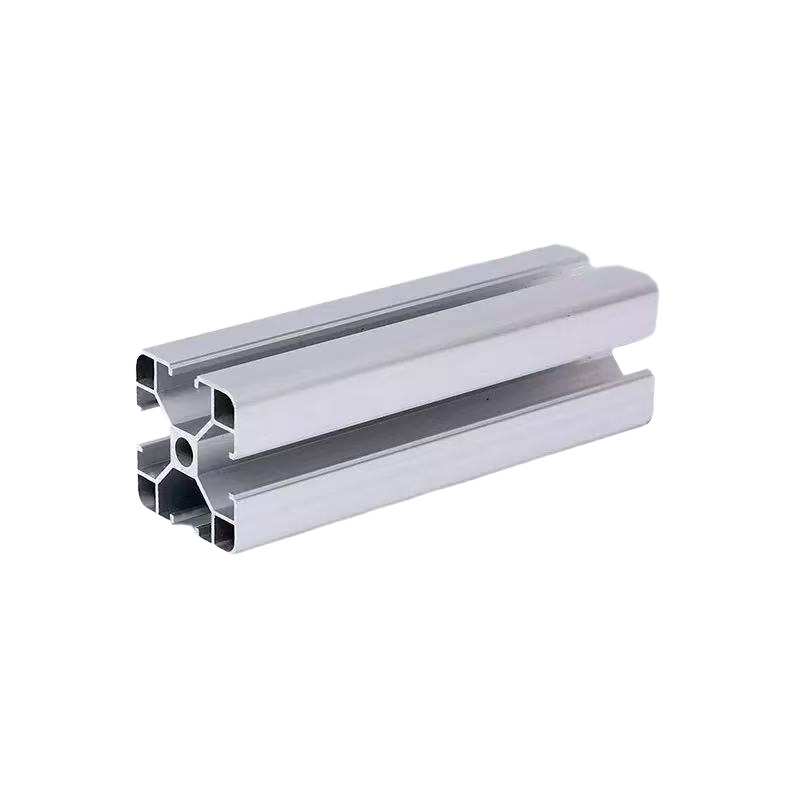
The thickness usually ranges from 0.5 millimeters to 15 millimeters. A thinner wall thickness can reduce costs, but it may also reduce strength.
Complex shapes are easier to achieve in 6063 alloy because this alloy flows more smoothly in the extrusion die.
It mainly includes yield strength, tensile strength and elastic modulus. For structural applications, the section modulus and moment of inertia determine the bearing capacity and deformation under load.
Aluminum profiles are the main structural components of modern doors, windows and curtain walls. In architectural applications, there are extremely high requirements for the surface quality and consistency.
The T-shaped slot is not to be assembled. The standardized groove can accommodate nuts and brackets, allowing for quick reconfiguration. Common sizes include 2020, 3030, 4040 and 8080. Among them, the 8080 profile can withstand a static load of 1200 kilograms per meter when made of 6061-T6 material.
The excellent thermal conductivity of aluminum makes it an ideal material for heat sinks. The extruded profiles with multiple heat sinks can maximize the heat dissipation area, thereby providing effective cooling for LEDs, power supplies and electronic components.
Transportation and Renewable Energy
Aluminum profiles reduce weight in vehicles while maintaining structural integrity. Solar mounting systems rely on extruded rails that are light enough for rooftop installation yet durable for decades of outdoor exposure.
6063 is commonly referred to as "construction alloy" because it is easy to be extruded into shape and can perfectly fill complex shapes. If your product has thin walls, complex details or will be visible in the final product, 6063 is the best choice. Windows, door frames, storefront decorations and interior decorative strips are almost always made of 6063 material.
6061 is a major material in structural materials. Its yield strength is approximately 50% higher than that of 6063-T6, allowing designers to meet stress requirements without having to increase the cross-sectional size. 6061 is more suitable for use in machine frames, structural supports, and components that require extensive processing. The ductility of 6061 is inferior to that of 6063.
The higher strength of 6061 helps meet the requirements for stress and deformation. For those structures with high appearance standards and thin walls with complex shapes, 6063's excellent extrudability and smooth surface offer advantages. In cases where reprocessing or drilling is required, 6061 has better machinability and more durable threads, while 6063 requires more careful handling. For visible components that need to maintain a consistent surface effect, 6063 can provide better anodizing results, but 6061 can better adapt to more process control.
The section modulus determines the bending stress - the larger the value, the smaller the stress generated under the same load. The moment of inertia controls the deflection; doubling the span length will cause the deflection to increase by more than four times.
Firstly, identify the types of loads and supports. Determine whether the load is a point load or uniformly distributed, and decide whether the profile is simply supported, both ends fixed, or cantilevered.
Secondly, examine the three failure modes. Calculate the bending stress by dividing the bending moment by the section modulus and compare it with the allowable stress of the alloy you are using. Assess the deflection because deflection usually limits the carrying capacity before the stress reaches the limit. For compressive loads, evaluate the buckling possibility.
Finally, verify through physical tests. The tests can confirm the calculation results and reveal actual factors that the theoretical analysis might overlook, such as residual stress and assembly tolerances, etc.
For simple spans, manual calculation is usually sufficient. For complex geometries or critical safety applications, finite element analysis is required.
The surface treatment effect not only affects the appearance but also the durability. Anodic oxidation treatment can form a durable oxide layer, presenting a metallic luster, with a thickness usually ranging from 8 to 25 micrometers. It has excellent corrosion resistance and is highly suitable for use in architectural decoration, electronic equipment, and visible components.
The powder coating offers a wide range of color options and exhibits excellent impact resistance at a thickness of 60 to 120 micrometers. It is cost-effective for industrial equipment and consumer products.
The PVDF coating can achieve the best color retention effect and excellent weather resistance performance, making it the ideal choice for curtain walls, coastal buildings, and high-ultraviolet-exposure applications.
The electrophoretic coating can achieve an extremely uniform coverage effect and has excellent anti-corrosion performance, suitable for medical equipment and high-humidity environments.
When choosing a surface treatment method, please consider the environment. For coastal or highly corrosive environments, advanced treatment methods such as PVDF or those with sufficient thickness of anodized oxidation should be used. For indoor industrial applications, standard powder coatings usually provide the best balance of cost and performance.
Q: What is the difference between 6061 and 6063 aluminum profiles?
A: 6063 offers better surface finish and extrudability for architectural use. 6061 provides 50% higher strength and better machinability for structural applications.
Q: How do I calculate load capacity?
A: Calculate bending stress (bending moment ÷ section modulus) and compare to allowable stress for your alloy. Deflection often limits capacity before stress does.
Q: Can aluminum profiles be welded?
A: Yes, with TIG or MIG processes. However, welding reduces strength in the heat-affected zone by approximately 40%, so use as-welded properties for joint design.
Q: What are T-slot profiles used for?
A: Modular framing for machine bases, workstations, conveyors, and safety guards. T-slots accept standard bolts and connectors for tool-free assembly.
Q: How tight are dimensional tolerances?
A: Precision profiles to EN 12020-2 maintain tight tolerances on wall thickness, straightness, and twist, with maximum weight of 10 kg/m and wall thickness ratios under 3.5.
Q: What finish lasts longest outdoors?
A: PVDF coatings offer maximum color and gloss retention in coastal or high-UV environments. High-quality anodizing also provides excellent durability.
Q: Are custom shapes expensive?
A: Custom shapes require die tooling, but many suppliers offer free die development for orders exceeding certain quantities (typically 5 tons).
Q: How do I choose the right profile size?
A: Consider loads, spans, and space. Small profiles (2020, 3030) suit light frames; medium (4040, 4080) handle automation; heavy (8080, 120120) provide rigidity for machine bases.


