

Views: 0 Author: Carl Xu Publish Time: 2025-09-12 Origin: Site


Washer are crucial components in mechanical and construction projects - they serve as a cushion, distributing loads and preventing fasteners from loosening. Among all materials, stainless steel stands out due to its outstanding corrosion resistance, durability, and strength. Therefore, it is highly suitable for application in demanding scenarios such as marine, automotive, and food processing industries.
Stainless steel washers are highly favored in various industries due to their unique advantages. Unlike carbon steel washers, stainless steel washers contain chromium, which forms a protective oxide layer to prevent rusting and corrosion.
This means that it still performs well in outdoor, humid or chemical-contaminated environments. Stainless steel has excellent tensile strength and heat resistance, and can maintain normal operation even under heavy loads or high temperatures. From household appliances to industrial equipment, stainless steel seals are the reliable choice, which can reduce maintenance costs and extend the lifespan of components.
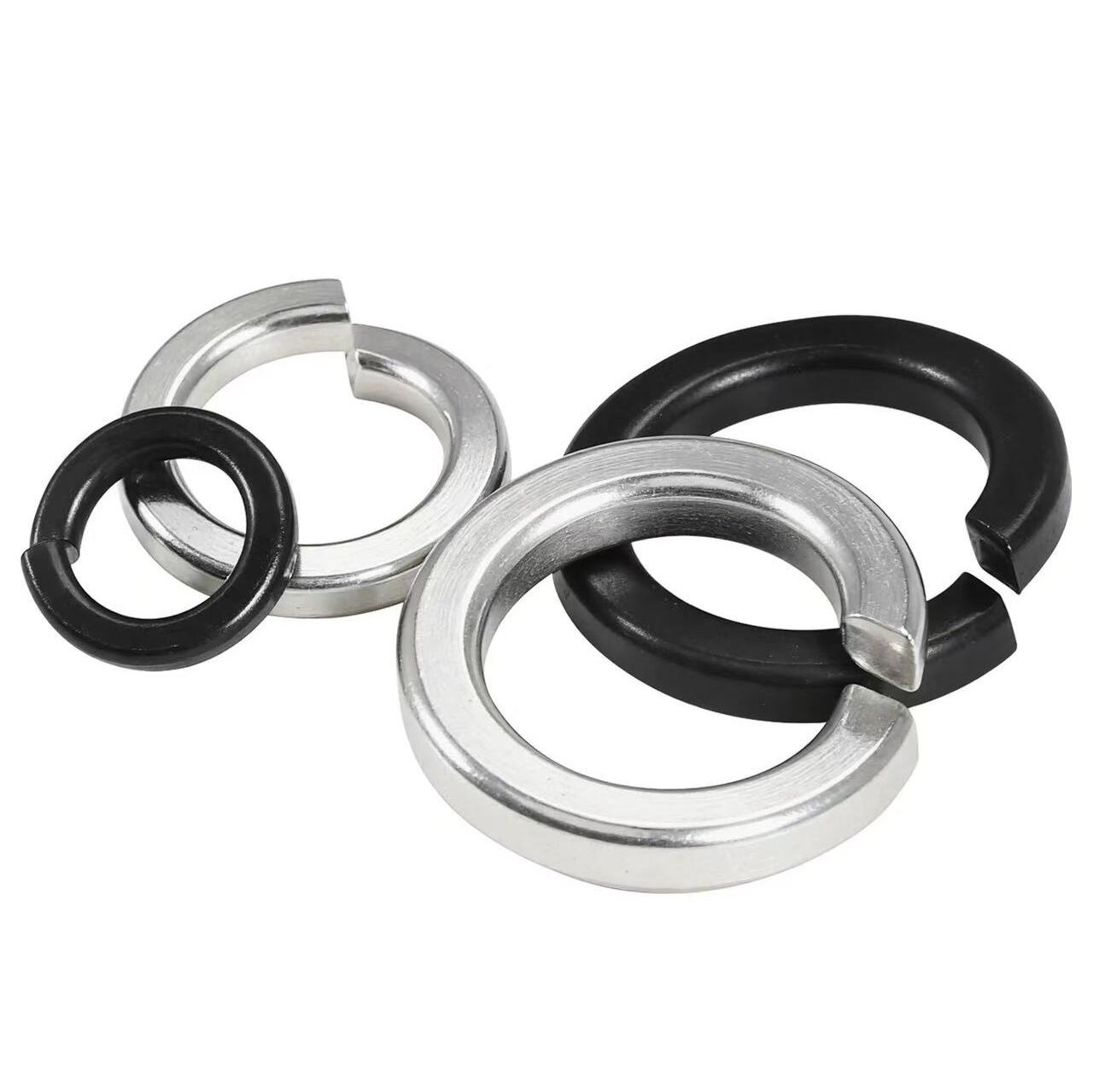
Stainless steel spring washers, The design purpose of spring washers is to prevent fasteners from loosening when the object vibrates. They have a split and twisted structure, and when compressed, they generate tension, thereby maintaining a stable load on the bolt or nut. Spring washers can be found everywhere in automotive engines, electrical equipment, and machinery, especially in situations with vibration. Their corrosion resistance ensures that they will not fail prematurely in humid or harsh conditions.
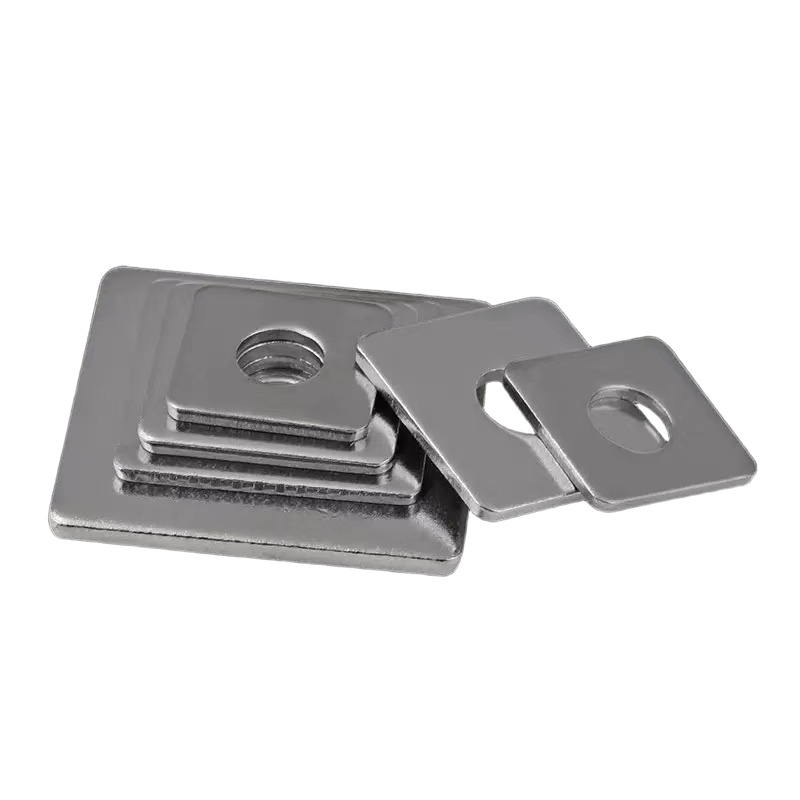
The pressure-bearing area of the square washer is much larger than that of the circular washer, making it highly suitable for distributing weight onto soft materials. The square shape also prevents rotation, which is very useful in situations requiring precise alignment. Square washers are commonly used components in construction and outdoor structures, and they can maintain their shape even under heavy loads.
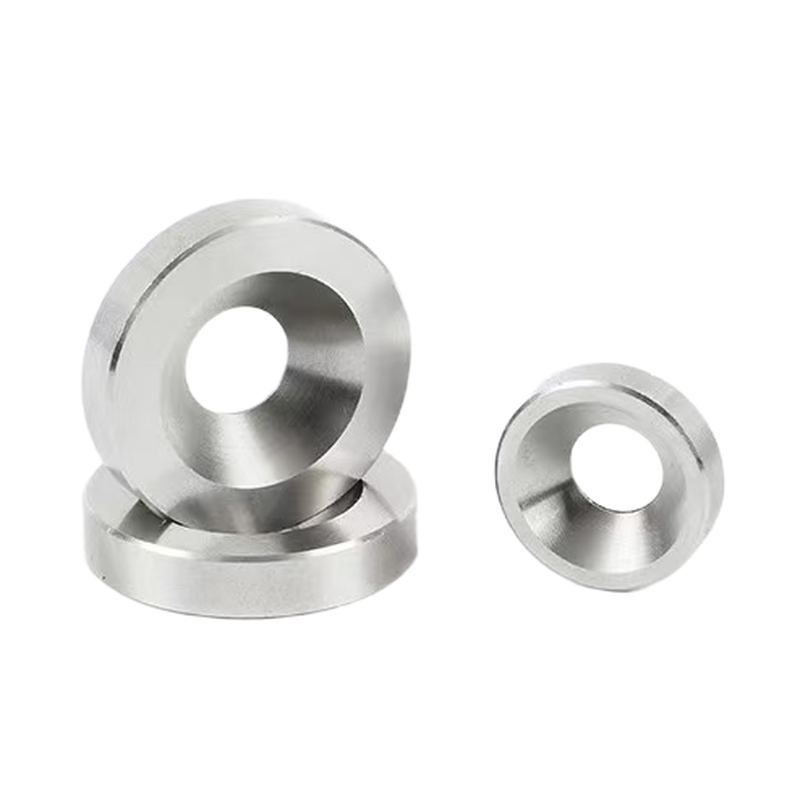
Countersunk washer has a gradually tapering surface, allowing the head of the countersunk bolt to be flush with the surface of the workpiece. This creates a smooth and understated surface effect - suitable for applications such as furniture, automotive interiors, or architectural decorations where appearance or safety are important. The countersunk washer combines this flush appearance with the corrosion resistance of stainless steel, making it suitable for outdoor or prominent locations.
When ordinary washers fail to meet the requirements of your project, custom washers are the solution. Manufacturers can produce various unique sizes and shapes of washers, or washers with special features. Custom washers are tailored for specific purposes - such as aerospace components, medical equipment, or specialized machinery. By collaborating with a reliable supplier, you can ensure that custom washers meet strict quality standards and material specifications.
Q1: What’s the difference between stainless steel washers and galvanized washers?
A1: Stainless steel washers have a longer service life. Galvanized washers, on the other hand, are coated with a zinc layer, providing temporary protection, but they may eventually peel off or wear out over time. Stainless steel is more suitable for use in harsh environments, while galvanized is an economical choice for tasks with less demanding requirements. Moreover, the material can also be selected.
Q2: Can I use a spring washer with a countersunk bolt?
A2: Usually, it's not possible. Spring washers require a flat surface for compression and adhesion, but the head of a countersunk bolt tapers gradually. Therefore, the countersunk washer can be used in combination with the countersunk bolt to achieve a flush and tight fit. If you need to prevent loosening, you can use locking nuts or anti-loosening glue.
Q3: How do I choose the right size washer?
A3: Ensure that the inner diameter of the washer matches the nominal size of the bolt (for example, a 1/4-inch bolt requires a 1/4-inch inner diameter washer). The outer diameter should be large enough to distribute the load, but not too large. Use the above washer size table as a starting point and consult your fastener supplier for specific project recommendations.
Q4: Are custom stainless steel washers expensive?
A4: This depends on the complexity of the design, the quality of the materials, and the quantity ordered. The cost per item for small orders may be higher, but large orders can be fully affordable. Many suppliers offer discounted prices for custom designs, especially if these designs conform to standard production processes.
Q5: What grade of stainless steel is best for washers?
A5: 304 stainless steel is the most common—it’s got solid corrosion resistance for everyday uses. 316 is more corrosion-resistant (great for marine or chemical spots but pricier). For high-temperature jobs, 310 stainless steel is the way to go.
Xiaoshan, Hangzhou, Zhejiang, China
carlxu@hardware-sp.com
Mon - Sat: 8AM - 6 PM